PERFECT GIFT 🎁 FINDER RIGHT HERE!

Packhelp’s approach to becoming transparent about sustainability

One of the hottest words this year in business circles has been sustainability. Business, across sectors and industries, have been highlighting new ‘sustainable’ approaches, sharing ‘sustainable’ solutions and moving to identify brands as ‘sustainable’.

Sustainability refers to fulfilling the needs of current generations without compromising the needs of future generations while ensuring a balance between economic growth, environmental care and social well-being.

But, amidst the chatter, are sustainability objectives actually being met? Are these sustainable approaches and solutions actually doing what they promise to? Is sustainability being used legitimately or is it just another buzzword, leveraged to gain favour and win brownie points amongst consumers?

One way to challenge the credibility of sustainability claims ESG framework   – a way to track progress towards environmental, social and governance standards. It’s now more important than ever to be aware of it – consumers are paying attention, investors are paying attention, and our planet is struggling to cope.  According to a KPMG report, 72 per cent of CEOs believe stakeholder scrutiny on ESG will continue to accelerate and 17 per cent of them indicate stakeholder scepticism around greenwashing is increasing.

Packhelp, a Polish startup that is disrupting the packaging industry has launched its very own sustainability report, transparently showing how it is doing with regard to ESG framework. Founded in 2015, the Polish company offers an online marketplace for custom-branded packaging, providing solutions for e-commerce brands, retailers, agencies and enterprises. Packaging doesn’t exactly directly associate itself with sustainability, so we decided to find out more about this initiative. 

Why has Packhelp published a sustainability report?

We decided to create an ESG framework and publish it in our report because we believe in transparency. It wasn’t, by any means, obligatory for us, but we did it anyway because it’s the mode of running business that we want to promote. Publicly disclosing our commitments is the way in which we want to demonstrate that our ESG initiatives and projects are not just greenwashing, empty promises, or lip service. Shedding light on ESG framework proves that the business is conducted in a considerate way and is not afraid of being accountable for its actions.

We believe that sharing our approach in such an open way helps customers understand our company better. It shows our motivations, and long-term vision, which is both important while entering a long-term collaboration with us.

But it also has a big impact internally. Publicly committing to our ESG goals is a signal to our employees that we take them seriously. It serves as an encouragement to include them in their everyday actions, and we already see the results. According to our internal survey, 51% of our employees identify as sustainability enthusiasts.

To wrap it up, the ESG framework is a set of measurable KPIs that will help us deliver on our promise and judge our progress on a yearly basis. It is the only path to build a credible and future-proof company for us.

What is an ESG framework, and what is the benefit of having one?

As the name suggests, ESG frameworks are standardised ways to communicate companies’ progress on environmental, social and governance initiatives.

There are a few of them in common use: Global Reporting Initiative (GRI), Sustainability Accounting Standards Board (SASB) and the upcoming european standard related to Corporate Sustainability Reporting Directive (CSRD), which is called European Sustainability Reporting Standard (ESRD). Just in November, the EU agreed on the draft of ESRS, so we can expect that it will become the standard for European companies in the next few years.

It’s more important than ever to back your promises as not only customers, but also potential employees and investors are paying attention to companies’ ESG performance and practices when deciding who to conduct business with, partner with, or invest with. According to a KPMG report, 72 percent of CEOs believe stakeholder scrutiny on ESG will continue to accelerate and 17 percent of them indicate stakeholder scepticism around greenwashing is increasing.

We are already preparing for our 2022 progress report that we will publish in Q2 2023. It will include both our custom metrics that are connected with the packaging industry that we’re operating in and official GRI metrics that will make it easier to compare our results with other companies. On top of that, we’re closely following the ESRD development in order to be able to respond to it once it enters into life. 

What are Packhelp’s key targets and framework objectives?

When creating our ESG framework for 2021, we took a lot of inspiration from GRI. We conducted a materiality assessment and invited external stakeholders for a dialogue in order to include their expectations in our strategy. It was a very valuable lesson. 

As an effect of this process, we defined 3 key areas of focus for Packhelp: Planet, People and Purpose and turned them into our reporting framework. 

In the planet area, our goal is to make sure that we commit to packaging that is made of recycled materials and is made for recycling. We put a lot of focus on forest protection and transition into a circular business. 

In the people area, we make sure to put employee satisfaction and development in the centre of our attention. 

In the purpose area, we wanted to emphasise sustainable business model innovation. That’s why key metrics are about the % of revenue that comes from selling sustainable products and offering services that help the packaging ecosystem to move in the right direction. 

Those metrics make our commitments measurable and visible. In addition to reporting purposes, we wanted to create something useful to us that is why we wrote them in such a way so that they are understandable to our employees. 

How will you monitor progress?

Packhelp reimagines customizable packaging with carbon labeling for e-commerce designs

14 Jul 2022 — Poland-based scale-up Packhelp is helping companies source customized packaging designs through its e-commerce site. The initiative’s founders recently began incorporating environmental sustainability labeling in collaboration with consultancy firm Inspired, allowing customers to provide transparency on the footprint of their products.

After launching in 2015, Packhelp says it attracted more than 53,000 customers in over 30 countries, primarily based in Europe, and last year announced a €40 million (around US$45.6 million) series B round to fuel its next phase of growth, following a €10 million series A round in 2019. 

Packhelp’s minimum order is just 30 boxes, meaning it can serve microbrands like Etsy creators or e-commerce platform sellers as they scale, in addition to larger enterprises such as on-demand food delivery giants like Uber Eats. 

Aleksandra Owczarek, Packhelp’s public relations manager, tells PackagingInsights that the business is looking to “disrupt the whole packaging industry by bringing in new standards and engaging different players along on the journey.” 

“If done right, we will become not only an important element of the commerce ecosystem but also a potential leader of something much bigger – a world-changing shift to sustainable solutions. By reshaping our process and introducing new products and services, we can make it easier for brands and suppliers to transition toward more environmentally friendly packaging,” continues CEO Wojciech Sadowski. ImageAn example of solutions offered to companies through the Packhelp website.

Carbon labeling 
The idea of measuring the carbon footprint of Packhelp’s best-selling products came to life in July 2021. Packhelp partnered with Inspired to conduct in-depth carbon and water footprint calculations of its products, paving the way for consumers to make fully conscious choices. The company also asked suppliers to help them in this pursuit by providing data. 

The biggest challenge of this project was getting to know the specifics of each vendor’s process, explains Owczarek. Initially, Packhelp launched a study based on a life cycle analysis of thirteen different packaging solutions, broken down into methods depending on the route of transport and variants of each product. 

The company then had to delve deep into the supplier’s sourcing, supply chain and transportation of each product. All in all, 300 different options were analyzed. 

“Thanks to the data gathering process, our suppliers also took their first steps when it comes to tracing their footprint and learned the parameters that they should take into consideration like where do they take the material from for each box, how are they transported, what distance do they go, how much energy is used during cutting and printing (production processes), and then how it’s sent to the customer,” explains Agnieszka Zych, senior production specialist.

The starting point of the calculation for this particular research was the carbon emission of a metric ton of cardboard, plastic or any other material. This process means that each product variant had to be weighed before it was possible to tally up its impact, and the weight of a package depends on its size, raw material and thickness. ImagePackhelp can also provide food contact packaging for the home delivery sector.
Carbon dioxide emissions were then calculated based on emission factors taken from the DEFRA base for primary and secondary raw materials, which are as follows: 821.23 kg equivalent CO2 per 1000kg and 718.54 kg equivalent CO2 per 1000 kg. 

Building consumer awareness
The goal of featuring information on the carbon and water footprint calculations is also to build carbon awareness among customers. The challenge is to create a future-proof business that will answer the needs of current and future generations of consumers. 

“We have noticed many companies building their carbon neutrality development strategies. However, without taking the product’s whole life-cycle and therefore engaging supply chain agents in the calculations, the change is not about to come anytime soon,” says Zuzanna Mazurek, the company’s head of sustainability. 

“We want to contribute to building cross-industry carbon awareness, and the value proposition of such a strategy cannot be created without taking numerical data into account.” 

Another initiative introduced by the start-up is adding a revolutionary feature in its Online Creator – a tool to personalize packaging without specific design knowledge. As of June, any company can add the FSC certificate directly to a packaging design, straight from the Online Creator. 

“In order to sell FSC-certified personalized products at Packhelp, we had to ensure that all participants in the supply chain were also FSC-certified: from the paper mill, the packaging manufacturer, to the printing house, and finally to Packhelp. This is just one more example of how we are committed to providing sustainable packaging for every business,” explains Mazurek. 

CEE founders on startup headquarters

Zosia Wanat

6 min read

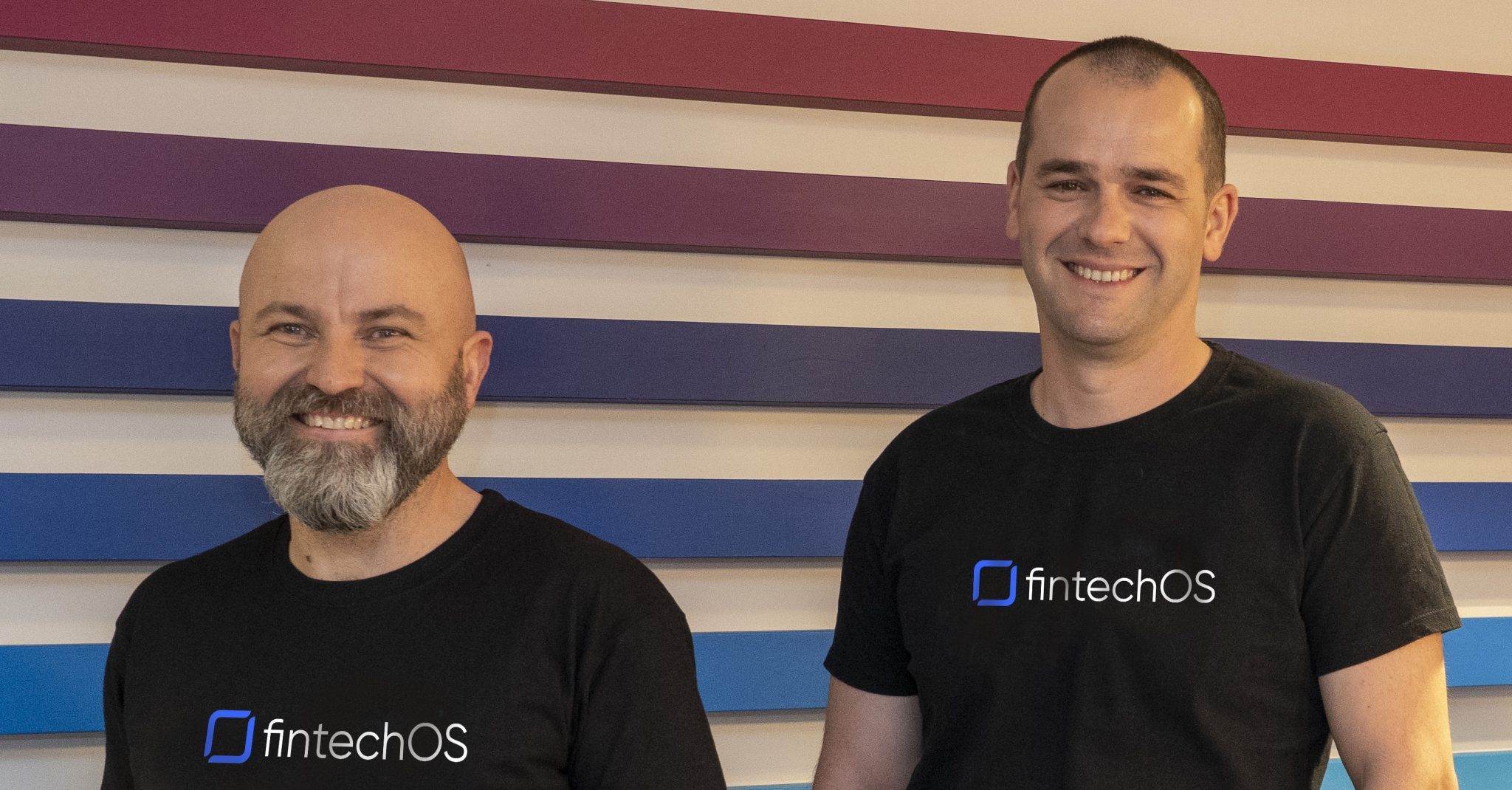
FintechOS cofounders Sergiu Negut (left) and Teodor Blidarus

When Teodor Blidarus, the CEO and founder of FintechOS, was first fundraising outside of his native Romania, he quickly realised that international investors looked at him differently to his peers from London or Silicon Valley. 

“Coming from an eastern European background you get more scrutiny as an entrepreneur,” he says. Investors questioned his ability to create a product for western audiences, to build a global company and to hire the right people. 

“I’m still puzzled that in the meccas of investment — the West Coast, the East Coast and London — you can get away with way more simplistic, idealistic or even naive business plans, just because you were born and bred there,” says Blidarus, who had been a successful entrepreneur before he started fintechOS. “The lack of belief in people from [central and eastern Europe] — it’s still pretty real.”

That was in 2017. Now his startup, which enables businesses to set up embedded finance operations, has customers around the world. It raised €51m in its Series B in 2021 in a round led by Molten Ventures, a UK VC firm — and it changed its location. FintechOS is now headquartered in London and New York, not in Bucharest.

So, if you want your startup to become a global success, do you need to move out of the region? Or does the boom of remote work and omnipresent inflation mean times are changing?

Going global 

Some of the biggest startup names from the region — Romanian software decacorn UiPath, Polish booking service Booksy and Hungarian slideshow maker Prezi — have moved their company’s headquarters (and founders) abroad, leaving just part of the team in CEE.

Some, like Bulgarian unicorn fintech Payhawk, were even pushed to move by investors, who weren’t willing to back a company based in a small and distant ecosystem without a strong rule of law. 

Founders and VCs tell Sifted that CEE domestic markets are too small, so companies have to go international early. Western ecosystems are also perceived as being more exciting, and offer more business possibilities and a much wider client base. Founders usually move west because they want to be closer to potential clients and investors. 

Blidarus says that for a company like fintechOS, having a presence in London, the most innovative financial hub in the world, has always been strategically important. But he also adds that startups have to “follow the money”. 

The CEE region lacked domestic venture capital for years — and even today, there are barely any late-stage funds in the region. The value of transactions is also significantly lower than in the West — in 2022, none of the 45 European rounds above €250m involved a startup from CEE, according to Dealroom. Out of 133 European investments of between €100m-250m, only eight took place in the region.

Founders say that until recently, they felt that international investors didn’t really pay attention to this part of Europe and had little knowledge of what was happening on the ground. 

“Investors are human beings as well,” Blidarus says. “The more you meet them, the more you can establish a trustful connection with them. It’s very useful to say, ‘Where are you based? Oh, London, I’m in London as well, okay, let’s meet in two days.’ And it starts from there.

“For them, there’s also an element of trust. Investors will look at players from their markets, from their jurisdictions, because they know and understand those markets well.”

Some of the regional VCs also focus on startup founders who are happy to relocate. Michał Rokosz, partner at Polish VC firm Inovo, says that while in today’s world it’s possible to attract the attention of investors from anywhere, the contacts founders make outside of CEE are priceless. 

“It all depends on the client,” he says. “If your client is an SME, you can do it from Poland. But if you run a B2B enterprise solution, technically you can also do it from Poland but it helps if you’re closer to a client. And if you’re based in Silicon Valley for a bit longer, you meet someone from Facebook, someone from Google, you talk with them about their new project and they say: ‘I will help you’.”

Global at home

But today some founders in the region are taking a different approach. Wojtek Sadowski is successfully running his startup Packhelp — a Polish marketplace that connects businesses with packaging makers — from an industrial area of Warsaw. The company, which is now the European leader in customised packaging solutions, raised a €40m Series B in 2021 in a round led by Paris-based B2B growth fund InfraVia Growth. 

It wasn’t easy at the beginning. “When I started to raise the first round in 2017 and tried to hit international investors, it’s fair to say that I got many ‘respectful nos’. It was sort of a sensation for those VCs when they saw an email from Poland in their inbox,” he says. 

But then, he says, he “surfed on the wave of the success” of UiPath, the Romanian unicorn which moved its headquarters to the US around that time and went public at a $35bn valuation a couple of years later. “Everyone realised that in CEE, potential unicorns are everywhere and all they need is cash,” Sadowski says.

As investors started to flock around, he didn’t feel the need to move his company abroad — and had all the talent he needed close to home. “Poland helped us,” he says, praising the availability of world-class engineering talent, which is cheaper than in the West, and the pool of specialists in the packaging field. 

He adds that where he’s based didn’t influence fundraising. “The fact that I was here didn’t stop me from going to London as much as I needed,” he says. “There was some chat that investors from London or Germany or France weren’t willing to invest in Poland — but that got kicked down very quickly and no one has ever had problems with it.” 

Opening an office and hiring people in Berlin or London also comes with significant costs, says Sadowski — something to consider, especially with an economic crisis looming over Europe. Until now, he says Packhelp has been able to serve its European customers and suppliers from Poland. “Why should we create costs of having people in London, renting an office in France, if we can do it effectively from Poland? It’s been saving us money.”

“The potential of all startups and the ambition of all startups should be global,” says Maximilian Schausberger, a managing director at Elevator Ventures, a venture branch of Raiffeisen, an Austrian bank with a presence in the region. 

“But if you look at many of the examples of successful international business, those companies have built a strong home base. If you are in a very small market, it can be such a huge advantage to expand in your own region, learn how to do it, set up your organisation, your culture, and then go global.”

Back to top